Maintaining a comfortable indoor environment is an important consideration for commercial property owners and managers. Employees, customers and visitors all benefit from spaces that remain at a suitable temperature throughout the year. However, traditional heating and cooling systems are not always the most practical choice, particularly in buildings with individual rooms, additions or areas with different temperature requirements.
Ductless HVAC systems can provide an alternative approach by delivering heating and cooling directly to individual spaces. For commercial buildings, this can offer greater flexibility and control while potentially simplifying installation.
Before making an investment, it is worth understanding how ductless systems work and the benefits they can provide.
Greater Temperature Control
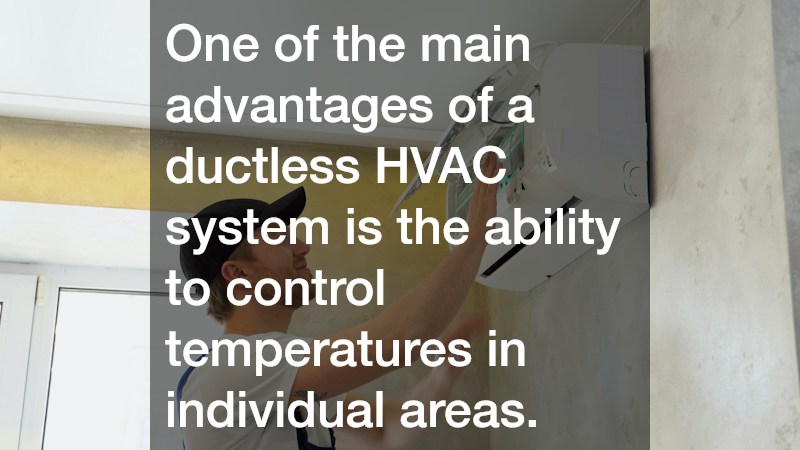
One of the main advantages of a ductless HVAC system is the ability to control temperatures in individual areas. Instead of relying on one central system to condition an entire building, separate indoor units can be installed in different rooms or zones.
This can be useful in commercial properties where different areas have different requirements. For example, an office may require a different temperature from a storage area or meeting room.
Zoned temperature control can also help businesses avoid conditioning unoccupied areas unnecessarily. Working with professionals who provide commercial air conditioning services can help property owners determine how many zones may be appropriate for their building.
Flexible Installation Options
Ductless systems can be particularly useful when installing traditional ductwork would be difficult or disruptive. Because they do not require extensive networks of air ducts, they can provide more flexibility when planning climate control for an existing building.
This can be beneficial for older commercial properties, extensions or buildings where structural limitations make duct installation impractical. Indoor units can be positioned in suitable locations while the outdoor component is installed in an appropriate external area.
A qualified HVAC professional can assess the building and recommend a configuration based on its layout and intended use.
Potential Energy Efficiency
Heating and cooling a large commercial building can consume considerable energy. Ductless HVAC systems may help improve efficiency by allowing businesses to condition specific areas rather than maintaining the same temperature throughout the entire property.
When rooms are unoccupied, their individual systems can potentially be adjusted or switched off without affecting occupied spaces. This level of control can help businesses manage their energy use more effectively.
The efficiency of a system will depend on factors such as its size, model, installation and operating conditions. Regular maintenance from providers of commercial air conditioning services can also help keep equipment operating as intended.
Improved Comfort For Employees And Customers
Temperature preferences can vary considerably between individuals. A single building-wide setting may not provide ideal comfort for everyone, particularly in properties with rooms that receive different amounts of sunlight or have varying levels of occupancy.
Ductless systems provide more targeted control, which can help create comfortable conditions in individual areas. This can be especially valuable in offices, retail environments, hospitality properties and other commercial spaces where comfort contributes to the overall experience.
Suitable For Building Expansions
Businesses often change their premises as their needs evolve. A company may add offices, meeting rooms or other spaces that were not part of the original building design.
Ductless HVAC can offer a practical way to provide heating and cooling in these areas without redesigning an entire central duct system. Additional units can potentially be incorporated into the overall climate-control strategy as the property develops.
This flexibility can make ductless systems an appealing option for businesses expecting their space requirements to change over time.
Easier Access For Maintenance
Ductless systems can also provide relatively straightforward access to many of their components. Since there is no extensive duct network to inspect and maintain, some maintenance tasks can be more direct.
However, commercial HVAC equipment still requires professional attention. Regular inspections can help identify issues such as blocked filters, drainage problems or component wear before they become more significant concerns.
Scheduling routine commercial air conditioning services can help businesses maintain their systems and address potential problems as they arise.
Consider The Long-Term Investment
Before installing a ductless HVAC system, commercial property owners should consider the building’s size, layout, occupancy patterns and existing heating and cooling infrastructure. A professional assessment can help determine whether ductless technology is appropriate.
It is also important to consider installation costs, ongoing energy use, maintenance requirements and expected equipment lifespan. Choosing a system based solely on its initial price may not provide the best long-term value.
Ductless HVAC can provide commercial buildings with flexible temperature control, targeted conditioning and potentially improved energy management. Its installation flexibility can also make it useful for existing buildings, additions and spaces where conventional ductwork is difficult to install.
If you are considering upgrading the climate-control system in a commercial property, speaking with experienced providers of commercial air conditioning services can help you assess your options. With the right system, professional installation and regular maintenance, ductless HVAC can be a practical investment in the comfort and functionality of a commercial building.